

Diatom Lanterns is a series of
sculptural lanterns inspired by a type of algae
that reflect and modify light.

Diatoms
Diatoms are single-celled creatures that are full of creative solutions. They live in oceans, lakes, rivers, and soils around the world, generating energy by turning sunlight into oils and sugar.
Tiny but mighty, they produce 20% of the oxygen on the planet and are key drivers of oxygen and carbon cycles.

Version Zero
This project started the goal of “making some art” one weekend.
It has since developed into a long-lasting curiosity that has crossed into biology, manufacturing, and optics.
How can diatoms inspire lanterns and light-based art?

Approach
With each set of lanterns, I include more biological principles and explore new-to-me technologies and manufacturing approaches.
Each piece is an invitation to think creatively about nature and the intersections of art and science.

SEM
Much of what we know about diatoms comes from scanning electron microscopy (SEM).
This technology creates black and white images by shooting a beam of electrons at a sample: capturing nanoscale details, analyzing material characteristics, and allowing us to take measurements.
(Credit to Lichen Labs for all microscope images)

Light Microscope
Diatom shells grow with astonishing precision, creating transparent barriers that manage materials and transform light.
Early in my research I had only seen diatoms as black and white SEM images. A light microscope reveals a different image - their shells show up as transparent structures…
…made of glass (SiO2).

Version 1
January–June 2024
The first version of Diatom Lanterns started with what I know. Version 1 is CNC machined wood and can hang from a ceiling or stand on a table. Designing and building this set of lanterns introduced me to electronics, lenses, and light filters.
First appearing in 2024 as a set of ten lanterns at FreezerBurn, future upgrades may turn them into energy hubs that power groups of smaller lanterns.

Version 2
November 2024 – Present
The next version translated diatom shapes into a compact lantern designed to cast patterns. Here I was learning 3D modelling and how to print custom parts and organic shapes. These small wall-mounted lanterns are made of wood, metal and 3D printed parts.
Movement Workshop:
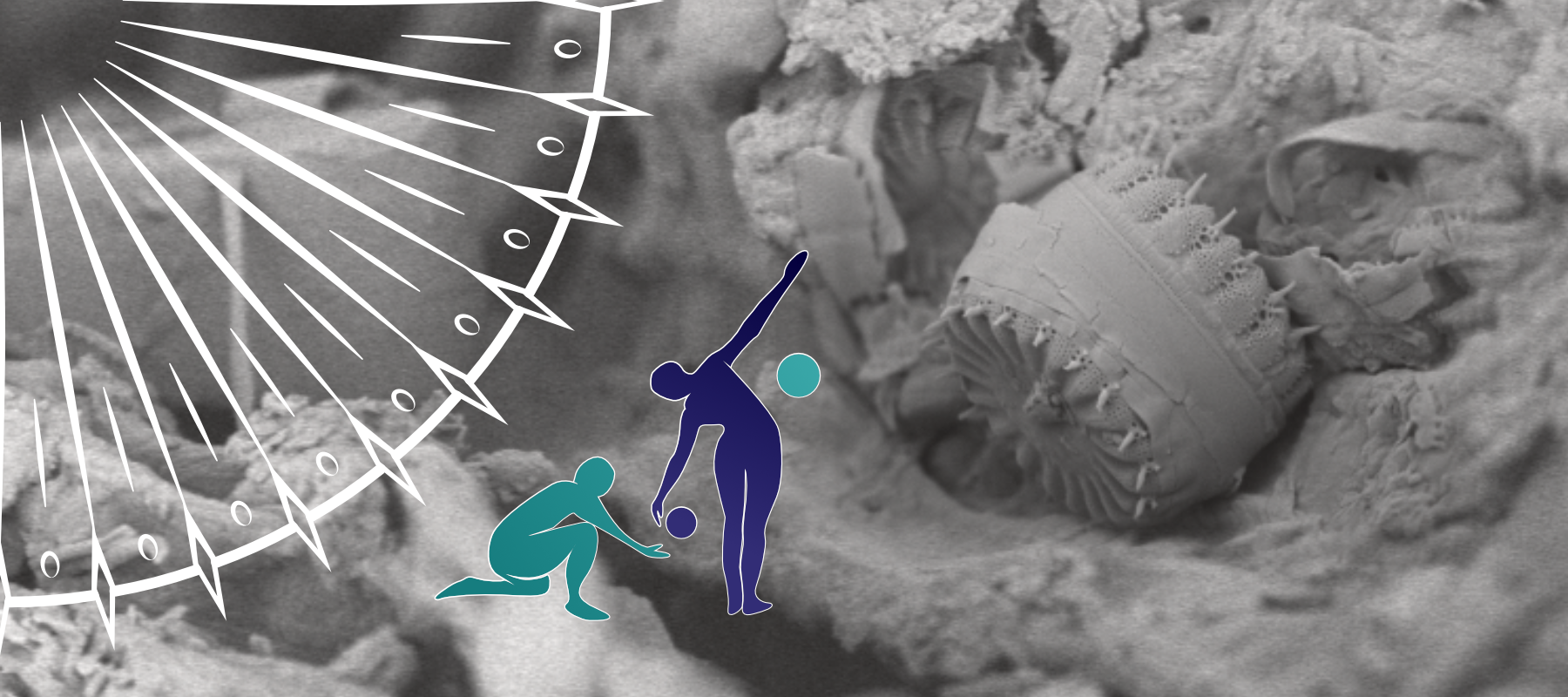
Dancing with Diatoms
In Spring 2026 I teamed up with Janita Frantsi to host a dance workshop with a group of movement experts, a chance to explore the biology and ecology of diatoms through dance. Workshop supported by the:


Back to Science
Adaptive Ecosystems is interested in the process of diatom biosilification: how diatoms grow glass shells.
Understanding this process will require specialized expertise in chemistry, materials, and optics.

Reflection
Arts funding has given me permission to learn through creativity and experimentation. During this project I have followed hundreds of curiosities, each building on the last. These explorations were made possible by support and funding from:
the Canada Council for the Arts
the Alberta Foundation for the Arts
the Edmonton Arts Council and The City of Edmonton.

Connect
Are you an expert on diatoms? A marine biologist with an interest in silification? Someone who knows a little more than most about mathematics or optics?